
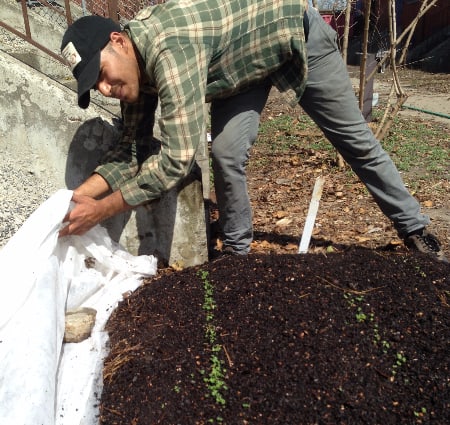
Syed Arif Mumtaz, our farm manager (assistance by Chris Thompson), pulls off radish sprout cover.
By Marisa DeDominicis
Why Radish? Every spring since I came to NYC, I have planted radishes in several community gardens including Sunnyside Community Garden (bulldozed in 1994), Children’s Garden at Sauer Park and the Neighborhood School garden, with my children Kali, Lucca and Selene, and others. Why radishes? Why not radishes? Radishes can be planted earlier than most vegetables, with almost sure success for the novice gardener. They are an early “sprouter” – coming up sometimes within 48 hours of planting the seed, they are forgiving: can sprout even if seeds are planted too deeply than the packet says. “Old” seeds (date noted on the packet is not current year) have a high germination rate in spite of their age. Radishes come in a variety of sizes and color; they are a versatile ingredient, and are grown in just about all cultures in the world. The first historical record is in the 3rd century BCE in southeast Asia. A radish resemble what they are supposed to like even if picked “early”. They are sometimes planted in order to harvest their 48 % oil content for use in the production of bio fuel. Radishes are also grown as a cover crop; they suppress weeds, and help prevent soil compaction. To top it off, though the appearance of the radish’s white flower indicates that it is too late for us to have a tasty meal for the root becomes bitter, this delicate flower gives pleasure to the eye, beauty to the garden, and attracts insects that pollinate this plant and others in the farm and surrounding Parkland. The radish completes its growing cycle in just about about 4 weeks! You know the cycle is complete when the flowers mature into brown seeds that can be harvested and replanted if using open pollinated seeds. Witness a child’s face when they tug at the base of the plant and pull up the jewel hidden underground! This year, come opening day on Governors Island, visitors will be able to share our bounty by touring our growing space, perhaps participate in harvesting their very own radish, and, perhaps, plant new seeds for others to enjoy.